October 12, 2026



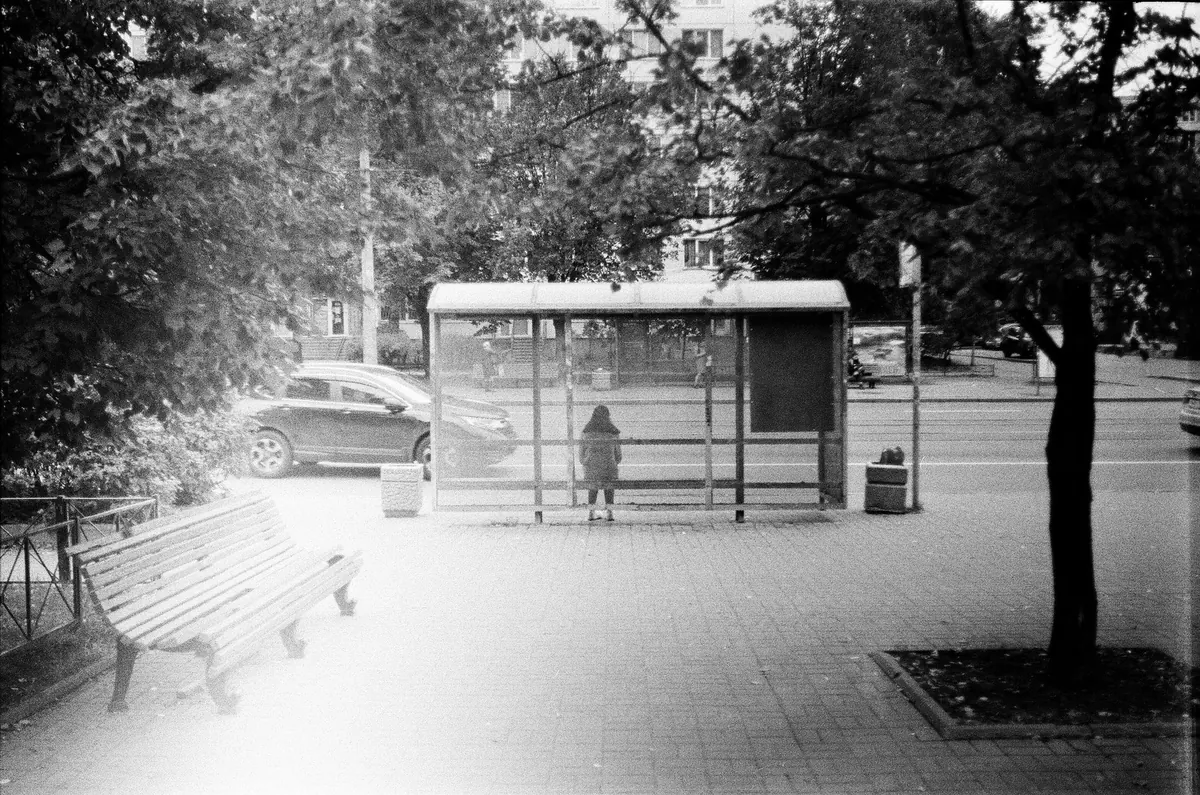
Last February, at the stop near the medical clinic, the wind came across the parking lot like it had somewhere to be. The shelter was a pole. The bench, such as it was, had a foot of plowed snow shoved against it. A woman with a rolling walker waited in the road because the sidewalk behind her had never been cleared. The bus ran late that morning and nobody blamed it. Everyone standing there was thinking the same thing: this is a chore, not a service.
We can do better than a pole and a prayer. Not because covered bus stops are glamorous, but because they are the cheapest, most obvious thing a town can build to keep people safe, warm, and moving in January.
Somewhere along the way we decided that a sign bolted to a post counts as infrastructure. It does not. A bus stop is where the public system meets the public, and it should work in bad weather, in the dark, and for someone who cannot stand for twenty minutes.
“Covered” is not one thing. It is a roof that actually overhangs the waiting area. It is a windbreak on the side the wind usually comes from. It is a seat with a back and armrests that someone with bad knees can push up from. It is a light, a clear path from the sidewalk, and a boarding spot that is not a slush pile. Take away any one of those and you have a decoration, not a shelter.
Plows do exactly what they are designed to do: they push snow off the road and onto the edges. That is where we put our bus stops. The result is a berm of frozen grit across the curb cut, a boarding area that disappears under a foot of plowed slush, and riders stepping into the travel lane to wave down a bus.
Add the rest of a Hall winter. Dawn is dark. Ice hides under a dusting. Salt and sand get spread on the road and rarely on the path to the bench. A missed bus in July costs you fifteen minutes. A missed bus in January costs you another half hour in wet clothes, and if you are on your way to a shift, it costs you more than that.
None of this is a mystery. Every rider who waits in it could list the ten worst stops in town from memory. That list is the plan. We just have not written it down.
Covered stops are usually framed as a comfort issue. They are really an access issue.
When a stop is unusable, people do not complain. They stop riding. They take a car they cannot afford, ask for a lift they hate asking for, or skip the appointment. A transit system loses riders one bad stop at a time.
If you have a heart or lung condition, or if a fall would be serious for you, cold waiting is not a small thing. Talk to your own doctor about what is safe for you rather than pushing through a wait that puts you at risk.
Every conversation about shelters runs into the same five objections. They all have reasonable answers.
If you are going to ask for something at a public meeting, ask for specifics. A useful shelter has:
The mistake is asking for everything at once in June and getting nothing by December. Ask for a sequence instead.
Late summer and early fall: request a stop-by-stop audit. Photographs, ridership, exposure, and a ranked list of the worst twenty. Ask public works and the transit agency to do it together, and to include a rider or two in the walk-through.
Fall: ask for a written snow-clearing plan that treats bus stops as priority locations, not leftovers. Ask for three pilot shelters this winter at the busiest, most exposed stops, with a named steward for each. A pilot is easy to say yes to. A ten-year capital plan is not.
Winter: watch what happens. Photograph the boarding pads after storms. Note which stops get cleared and which get buried. This is the evidence that wins the spring budget conversation.
Spring: ask for a line item. Even a modest annual amount, repeated, gets you a few shelters a year. Five stops a year is fifty stops in a decade. That is a transformed system, not a gesture.
This does not require a committee. Pick the stop you know is worst. Take three photos on a bad morning: the path from the sidewalk, the boarding spot, and the bench. Write down the date, the time, and what made it unusable. Send it to your council member and the transit agency, and say one sentence: I would like this stop on the list for a shelter and a snow plan.
Then ask the business next to it whether they would host a bench and keep the path clear. Many will say yes. Some will say yes with a trash can and a light. Repeat this at the two or three worst stops in your neighborhood, and you have something better than a complaint. You have a list, with pictures, that a budget can answer.
Winter will come back. It always does, on schedule, whether or not we are ready. The only question is whether the person with the walker is standing in the road again, or sitting under a roof, out of the wind, waiting for a bus that can actually reach them.
Photo: Anton / Pexels

News and updates from the hall community.
Copyright © 2026 The Hall Times. All rights reserved. The Hall Times.